Operational detail
Teams need backup status, evidence, expected jobs, and alerts to investigate what requires action.

Backup Pulse brings backup health, alerts, job evidence, and recovery validation into operational visibility and executive reporting that is easier to share with management.
When backup evidence lives across inboxes, consoles, and scripts, IT teams have to consolidate status information before they can explain risks, open alerts, or recovery-validation activity to others.
Teams need backup status, evidence, expected jobs, and alerts to investigate what requires action.
Leadership needs a concise view of backup health, readiness signals, risks, and priorities rather than raw system output.
Centralized backup evidence helps make both conversations more consistent and less dependent on manual consolidation.
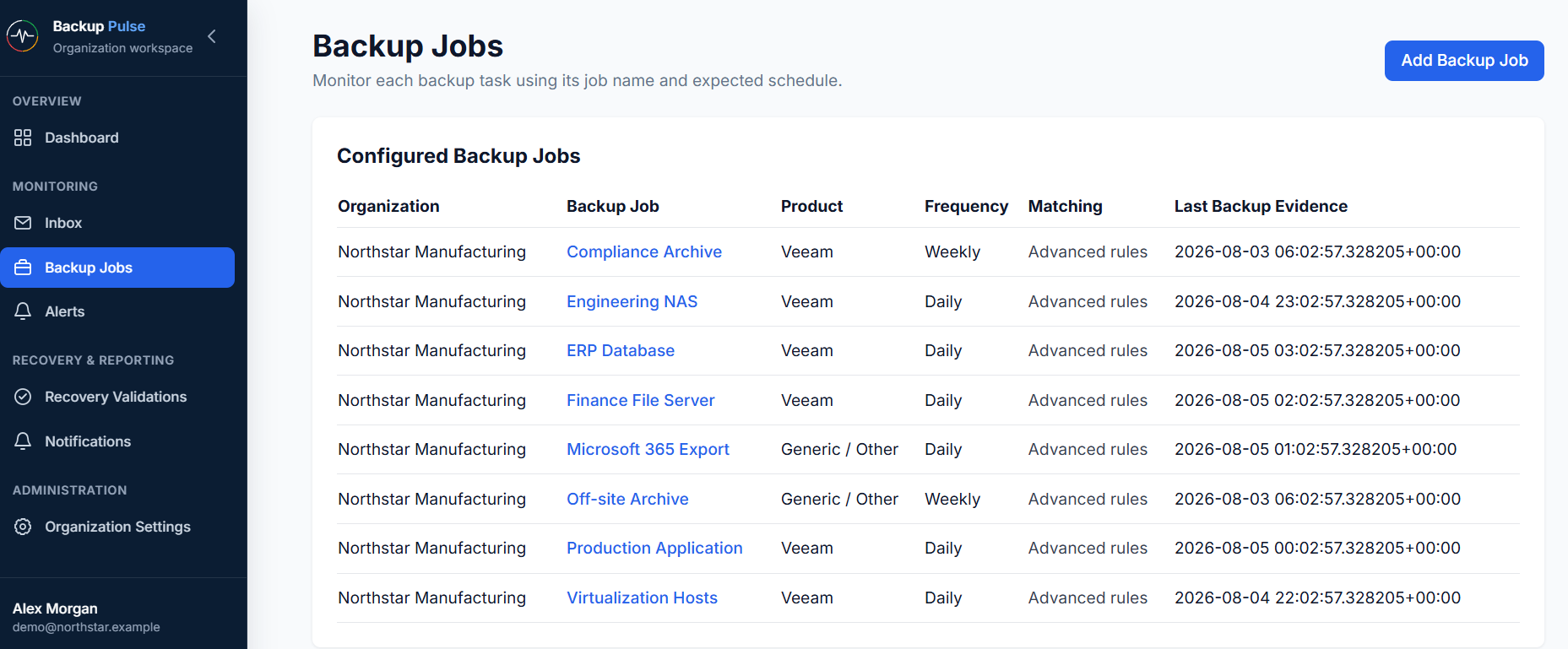
Backup Pulse provides a central view of job health, recent backup evidence, missed or failed activity, and open alerts. This gives operations teams the detail needed to review the environment and follow up on risks.
For the monitoring workflow behind that visibility, see how backup monitoring works.
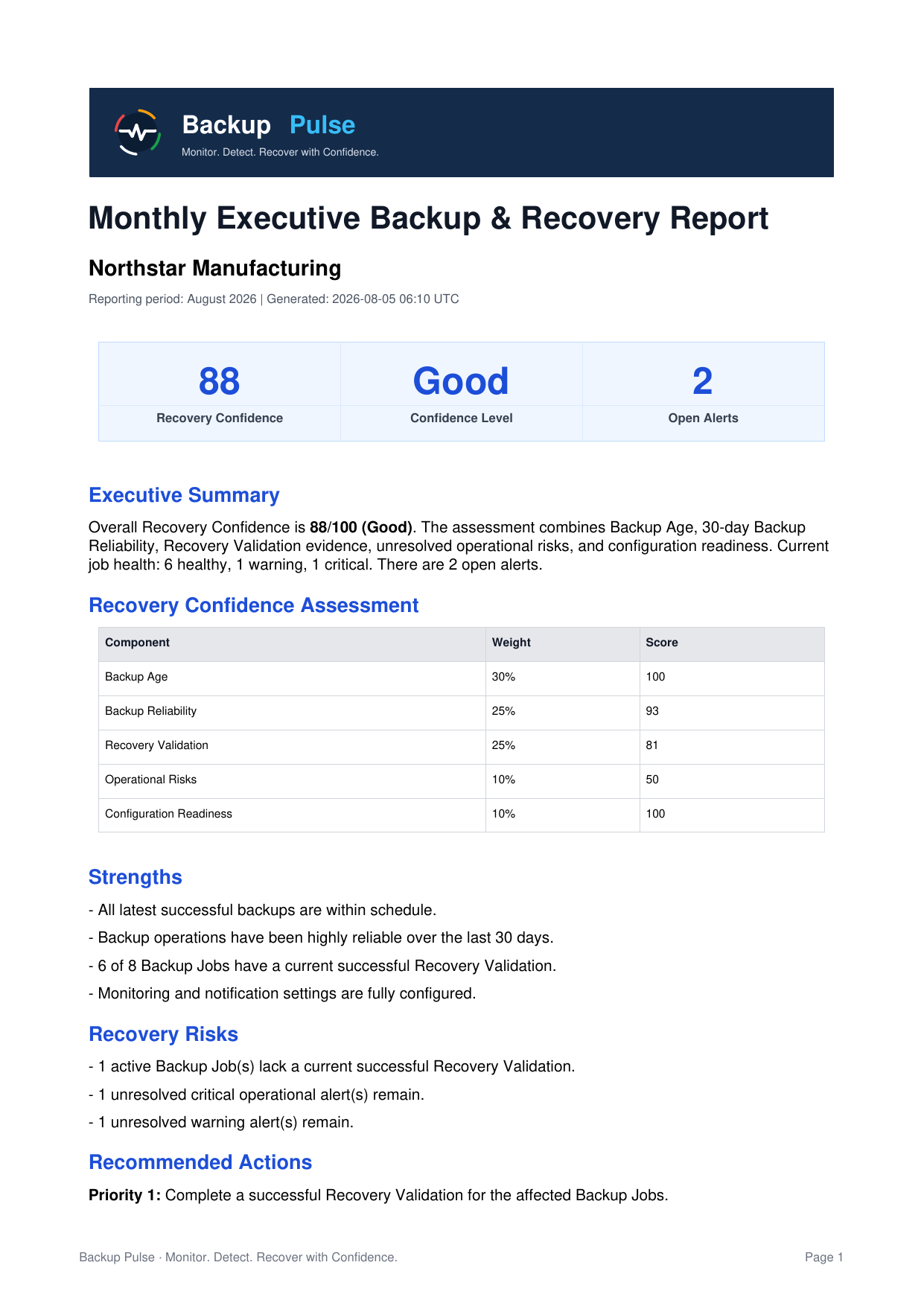
Backup Pulse generates a downloadable executive backup report that summarizes health, alerts, risks, Recovery Confidence, and recovery-validation information. It gives management a concise way to understand what is healthy, what needs attention, and why.
The report supports communication; it does not replace operational investigation or guarantee that a recovery will succeed.
Backup reporting is stronger when backup status is considered alongside recorded restore testing and recovery validation. Recovery Confidence helps bring those signals into a management-friendly readiness view.
Explore recovery readinessBring operational evidence and executive visibility together in Backup Pulse.