Backup success
Successful jobs indicate that backup activity completed, but do not guarantee that a recovery process will work when needed.

A completed backup is useful evidence, but it does not by itself prove that recovery procedures have been tested recently. Backup Pulse helps teams track recovery validation alongside backup health.
When an incident happens, a record of completed jobs is only part of the story. Teams also need to know whether restore testing or recovery validation has been recorded, how recently it occurred, and which backup jobs it supports.
Successful jobs indicate that backup activity completed, but do not guarantee that a recovery process will work when needed.
Restore-testing and recovery-validation activity provides useful evidence that can be recorded against the relevant jobs.
A visible validation history helps teams see whether recovery evidence is current or whether a gap needs attention.
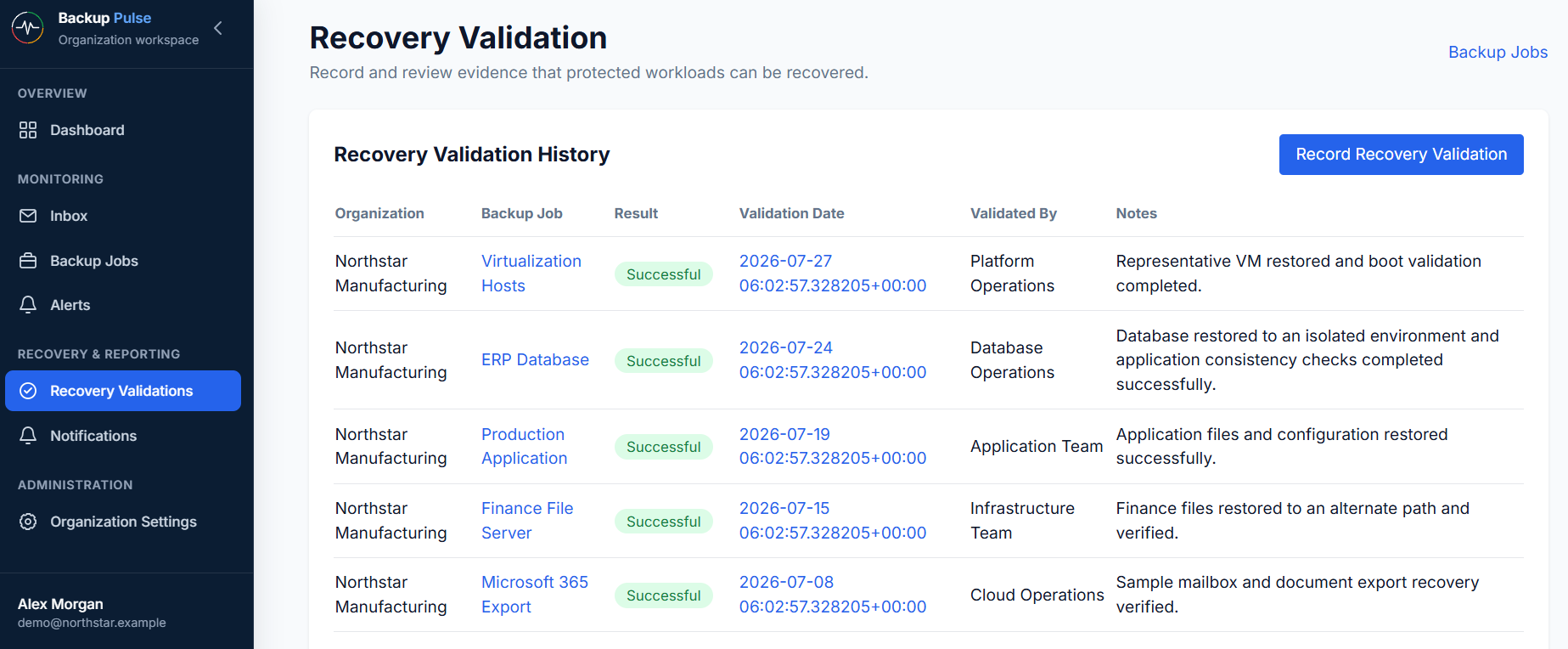
Backup Pulse records recovery validation activity rather than performing restores automatically. This gives operations teams a practical history of restore testing and recovery checks alongside the backup evidence they already monitor.
That history makes it easier to discuss what has been validated and what still needs review.
Recovery Confidence brings together backup health, backup age, and recovery validation evidence in a management-friendly indicator. It helps focus attention on areas that may need follow-up without claiming to guarantee recoverability.
See backup monitoring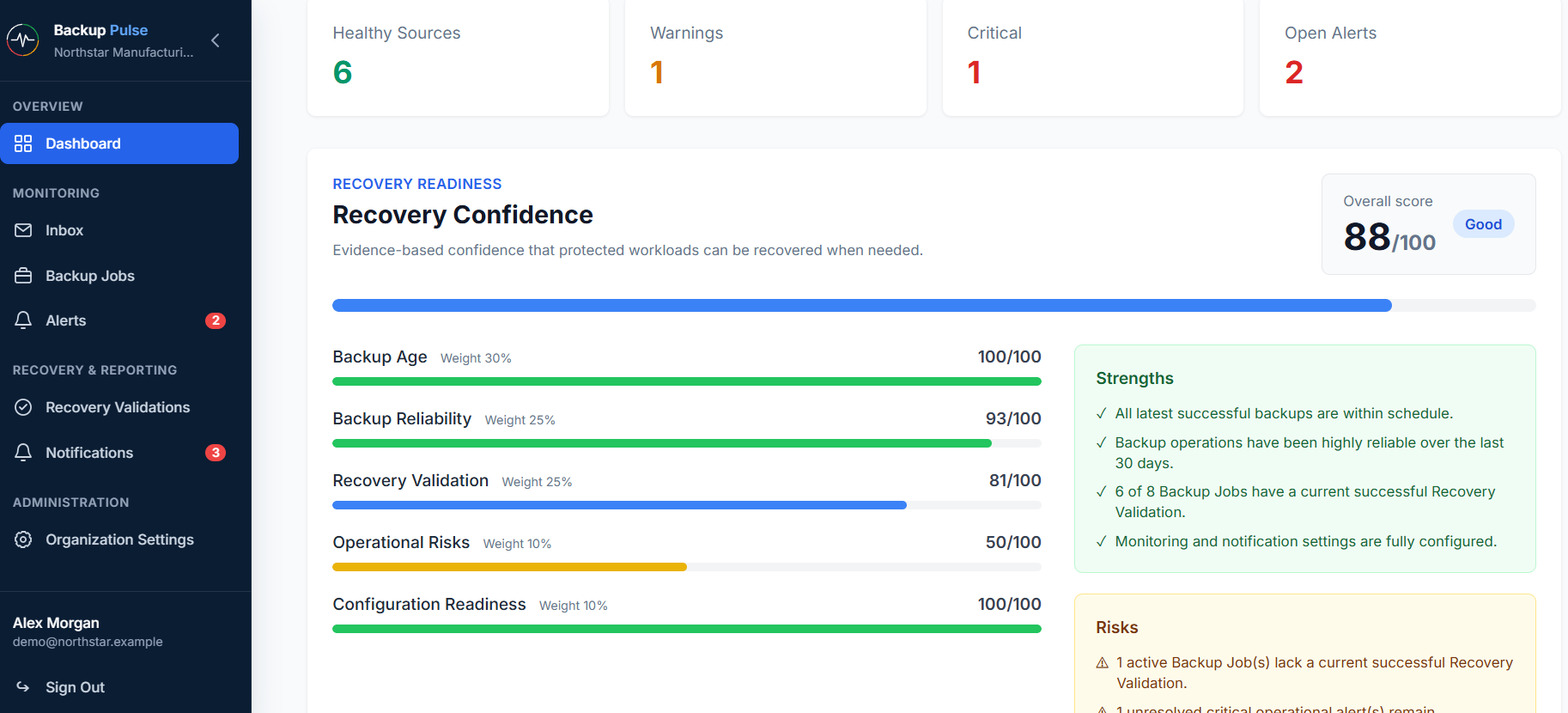
Recorded validations, open issues, and backup health give teams a clearer basis for recovery-readiness conversations. Those signals can also support concise communication with management.
Explore backup reportingStart with the backup systems and validation activity you already have.